The Best Crackers For A Charcuterie Board

This post may contain affiliate links. As an Amazon Associate, I earn from qualifying purchases. View our full disclosure here.
The crackers may not be the flashiest part of a charcuterie board, but the right ones make every bite better. From light, crisp wafers to sturdy seeded crackers, I’ll help you choose the best crackers for your cheeses, meats, and favorite spreads.

The Cracker Matters More Than You Think
I used to think of crackers as the easy part—grab a box or two and call it good. But after building plenty of boards, I’ve learned that texture, strength, and flavor really do matter.
A delicate wafer is lovely with Brie or prosciutto but can crumble under a thick spread. A sturdy multigrain or flatbread cracker can hold up to goat cheese, pâté, and hearty toppings without breaking in your hand. I usually offer a mix so guests can build different bites.
If you’re planning the entire spread, my simple charcuterie board guide walks you through choosing and arranging all the components. Here, we’re focusing on finding the right crackers for the job.
Classic Crackers for Charcuterie Boards
These reliable grocery-store choices have familiar flavors and work with a wide range of meats and cheeses. Include at least one neutral cracker so the toppings, not the cracker, can take center stage.
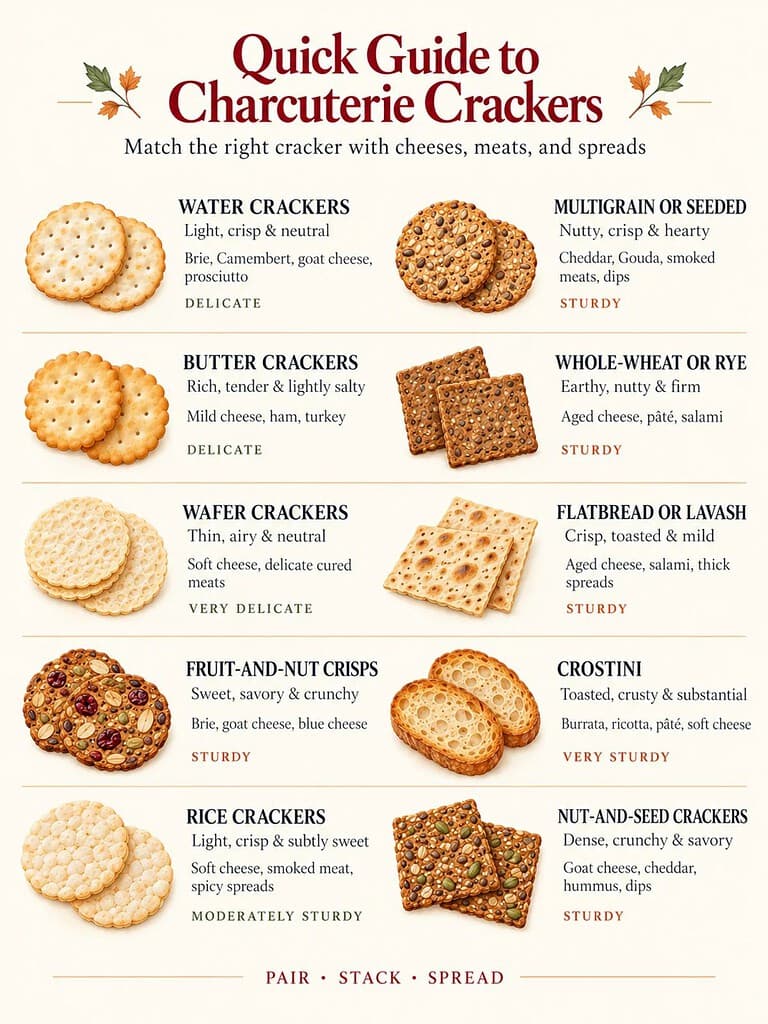
Water Crackers
Water crackers are light, crisp, and mild, making them one of the most versatile choices for charcuterie. They pair especially well with Brie, Camembert, goat cheese, pâté, and delicate cured meats.
Carr’s Table Water Crackers are the classic example and are easy to find in most grocery stores.
Multigrain and Seeded Crackers
Multigrain crackers bring a nuttier flavor and sturdier texture to the board. They can handle sliced cheddar, aged Gouda, smoked meats, hummus, and thicker spreads without breaking easily.
This is one of my favorite styles to include because it adds both texture and visual interest.

Butter Crackers
Butter crackers are rich, tender, and lightly salty. Familiar options like Ritz are crowd-friendly and pair nicely with mild cheese, ham, smoked turkey, and simple spreads.
Because they crumble more easily, they’re better for layering than spreading.
Whole-Wheat Crackers
Whole-wheat crackers have a heartier texture and subtle nutty flavor. Wheat Thins and Triscuits work well with cheddar, Gouda, salami, smoked meat, and savory dips.
Rye Crackers
Rye crackers have a deeper, earthier flavor and a firm texture. Pair them with pâté, salami, smoked meats, aged cheese, or a sharp mustard.
Thin rye crispbreads such as Wasa are especially good when you want something sturdy, though larger pieces may need to be broken into more manageable portions before serving.

Artisan Crackers for Charcuterie Boards
Artisan crackers bring more distinctive shapes, textures, and flavors to the board. I like to pair one of these with a simpler cracker so guests have both a neutral option and something a little more interesting.
Wafer Crackers
Wafer crackers are exceptionally thin, crisp, and airy. Their mild flavor works beautifully with Brie, Camembert, fresh goat cheese, prosciutto, and thinly sliced ham or turkey.
34 Degrees Crisps come in several flavors and look especially pretty fanned around a wheel of soft cheese. Just handle them gently as they break easily.
Herb Crackers
Rosemary, thyme, and other herb-flavored crackers pair well with tangy goat cheese, blue cheese, smoked meats, and savory spreads. Since the herbs add noticeable flavor, keep the other pairings fairly simple.

Flatbread and Lavash Crackers
Flatbread and lavash crackers are thin but sturdy, with a lightly toasted flavor. They’re a good match for aged cheddar, Manchego, Parmesan, salami, pepperoni, and thick dips.
La Panzanella Croccantini are a popular grocery store option. Their long shape also adds visual variety among smaller round and square crackers.
Fruit-and-Nut Crisps
Fruit-and-nut crisps combine dried fruit, seeds, and nuts in a crunchy twice-baked cracker. Their sweet-savory flavor pairs especially well with Brie, goat cheese, blue cheese, aged cheddar, fig jam, and chutney.
Raincoast Crisps are a well-known example and come in seasonal flavors such as cranberry hazelnut and rosemary raisin pecan. Because the flavors are more pronounced, one variety is usually plenty.

Alternative Breads and Crackers
A few bread-based options add shape and texture beyond the usual boxed crackers. These are especially useful when you’re serving soft cheese, pâté, or a thick spread that needs a sturdier base.
Crostini
Crostini are thin slices of baguette toasted until crisp. Their sturdy texture makes them one of the best choices for burrata, whipped ricotta, goat cheese, pâté, and other spreadable toppings.
You can make them ahead or buy packaged crostini for convenience. If you like this style of appetizer, try my whipped ricotta crostini with antipasto toppings.
Grissini
These long, slender Italian breadsticks add height and shape to a charcuterie board. Their mild flavor works with nearly any cured meat or cheese, and prosciutto can be wrapped around them for an easy bite.
Serve grissini in a narrow glass or lay them along the edge of the board so they don’t cover smaller ingredients.
Pretzel Crisps
Pretzel crisps bring extra saltiness and a firm crunch. Pair them with Brie, Camembert, goat cheese, aged cheddar, Gouda, mustard, or beer cheese.
Since their flavor is more pronounced, offer them alongside a milder cracker rather than making them the only option.
Taralli
Taralli are small, ring-shaped Italian crackers with a dense, satisfying crunch. Traditional versions are often seasoned with fennel, black pepper, or olive oil.
They pair particularly well with prosciutto, salami, mortadella, provolone, Parmesan, and marinated vegetables. Their distinctive shape also adds a fun visual detail to the board.

Gluten-Free Crackers for Charcuterie
A good gluten-free option means everyone can build a bite from the same board. Check the package carefully and keep gluten-free crackers separated from regular crackers if cross-contact is a concern.
Nut-and-Seed Crackers
Crackers made with almonds, seeds, or other nut flours tend to be sturdy, crunchy, and deeply savory. They pair well with goat cheese, Brie, cheddar, smoked meats, hummus, and thicker dips.
Simple Mills Almond Flour Crackers, Blue Diamond Nut-Thins, and Mary’s Gone Crackers are widely available options.
Rice Crackers
Rice crackers have a light texture and mild flavor that won’t compete with the rest of the board. Pair them with soft or semi-soft cheese, smoked meats, and spicy or tangy spreads.
Look for simple salted varieties rather than strongly seasoned flavors when you want the cheese to remain the focus.
Cheese Crisps
Cheese crisps aren’t traditional crackers, but they provide plenty of crunch without grains. Their concentrated savory flavor works best with cured meats, olives, pickles, fresh fruit, and tangy dips.
Because they’re already rich and cheesy, I wouldn’t pair them with your strongest cheese. Use them as a small extra rather than the board’s primary cracker.

Best Crackers for Soft Cheese and Spreads
The best cracker depends on whether you’re layering cheese on top or using a knife to spread it. A delicate cracker can be lovely with a thin slice of cheese, but it may snap under pressure.
For Brie and Other Soft Cheeses
Water crackers and wafer crackers let mild, creamy cheeses such as Brie and Camembert remain the focus. Fruit-and-nut crisps are another favorite when you want a sweeter contrast.
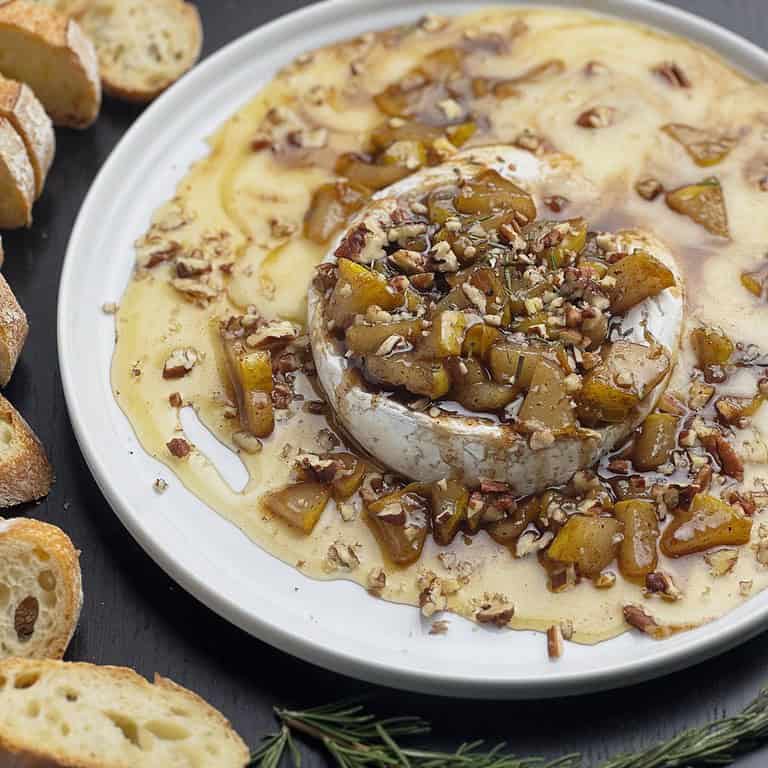
For a whole wheel of baked or very soft Brie, offer something sturdier alongside the delicate crackers. Flatbread, lavash, crostini, and multigrain crackers are easier to spread onto without breaking.
For Thick Spreads and Dips
Choose a firm cracker for goat cheese, whipped ricotta, hummus, pâté, and thick dips. The most reliable choices are:
- Flatbread or lavash crackers
- Crostini
- Multigrain and seeded crackers
- Whole-wheat or rye crackers
- Nut-and-seed crackers
- Fruit-and-nut crisps
If you’re unsure how sturdy a cracker is, test one before arranging the board. It’s much better to find out in the kitchen than when your guests start spreading the cheese.

How to Arrange Crackers on a Charcuterie Board
Choose two to four cracker varieties with different shapes, textures, and flavors. A neutral cracker, a sturdy option, and one more distinctive style will cover most pairings without making the board feel crowded.
- Place them in more than one area: Smaller groupings make crackers easier to reach from different sides of the board.
- Vary the shapes: Mix rounds, rectangles, long flatbreads, or breadsticks for a more interesting arrangement.
- Create loose rows or curves: Fan round crackers or lean rectangular crackers against a bowl or wedge of cheese.
- Protect delicate crackers: Keep wafers and water crackers away from wet fruit, pickles, and dips.
- Keep extras nearby: Refill the board as needed or serve overflow crackers in a basket.
- Add them shortly before serving: This keeps them crisp, especially if the board has been refrigerated.
For planning purposes, allow approximately 6 to 8 crackers (or 3 to 4 ounces) per person when the board is served as an appetizer. Add more if crackers are the main base for several dips and spreads.

FAQs
Keep Building Your Board
Once you’ve chosen the crackers, use my guides to find the best cheeses for your charcuterie board and the best meats to serve alongside them. You can round out the spread with my favorite pickles and briny pairings and jams, mustards, and other spreads.
For seasonal boards and more entertaining inspiration, browse all of my charcuterie board ideas.
Do you have a favorite cracker-and-charcuterie pairing I missed? Share it in the comments—I’m always looking for new combinations to try!